
Behind the Board.
Behind it is a lifelong interest in making information easier to organize – and a belief that running a business shouldn’t mean constantly searching for what you need.
This is the story of how xBoard came to be.


Read the story as text
The founder of xBoard tells how it came to be – from his father’s computer lab on an Air Force base in the early 1980s, through Total Recall, ImageQuix, and Blueprint, to four years of rebuilding xBoard until it matched the vision he’d had since childhood.
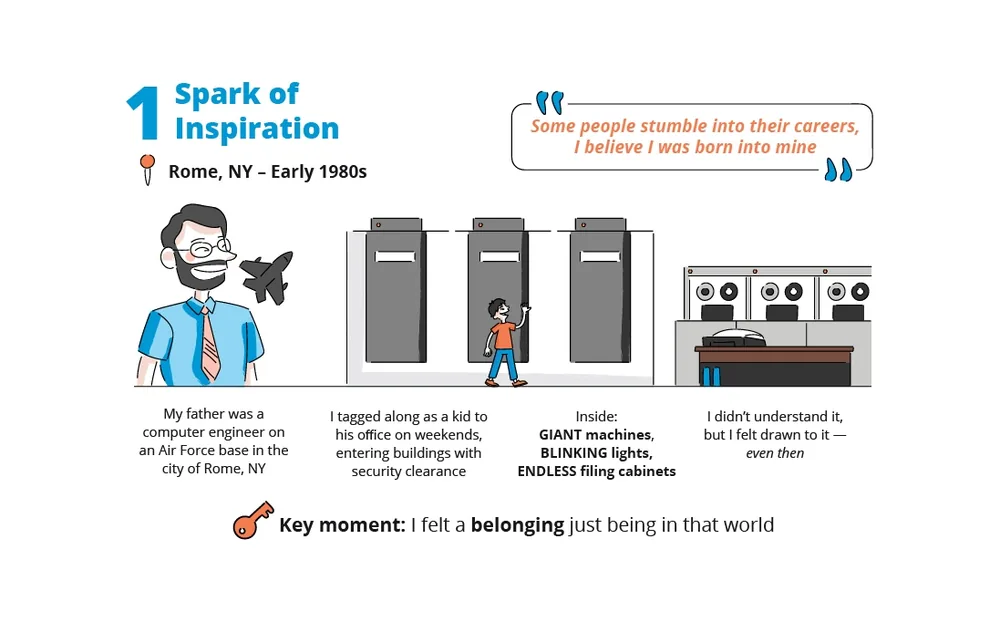
Slide 1 of 10 · Rome, NY – early 1980s
Spark of Inspiration
My father was a computer engineer on an Air Force base in the city of Rome, New York. As a kid I tagged along to his office on weekends, entering buildings with security clearance.
Inside: giant machines, blinking lights, endless filing cabinets. I didn’t understand it, but I felt drawn to it – even then.
Key moment: I felt a belonging just being in that world.
“Some people stumble into their careers. I believe I was born into mine.”
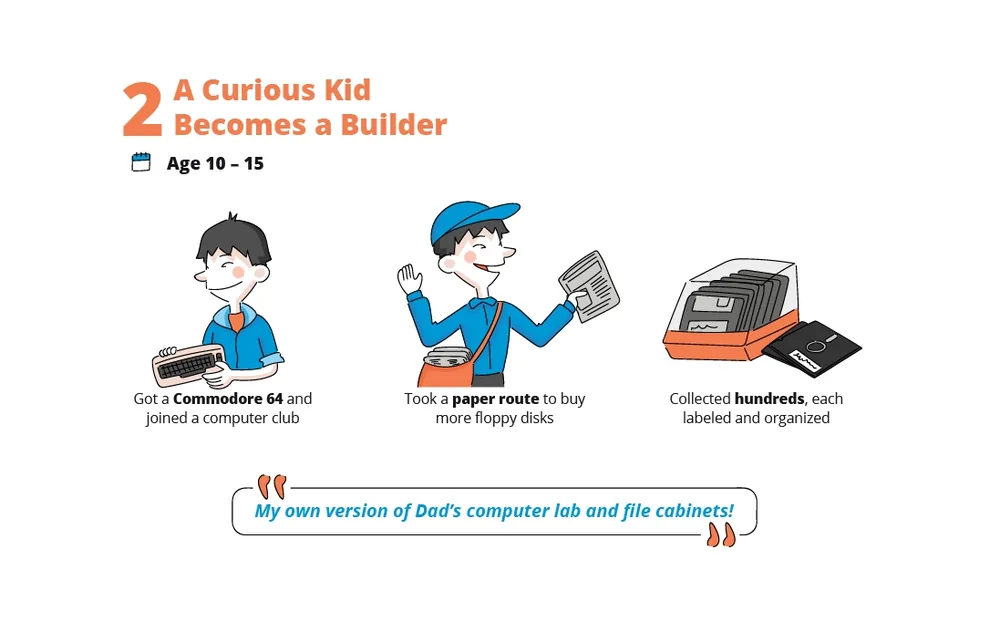
Slide 2 of 10 · Age 10–15
A Curious Kid Becomes a Builder
I got a Commodore 64 and joined a computer club.
I took a paper route to buy more floppy disks, and collected hundreds of them – each one labeled and organized.
“My own version of Dad’s computer lab and file cabinets.”
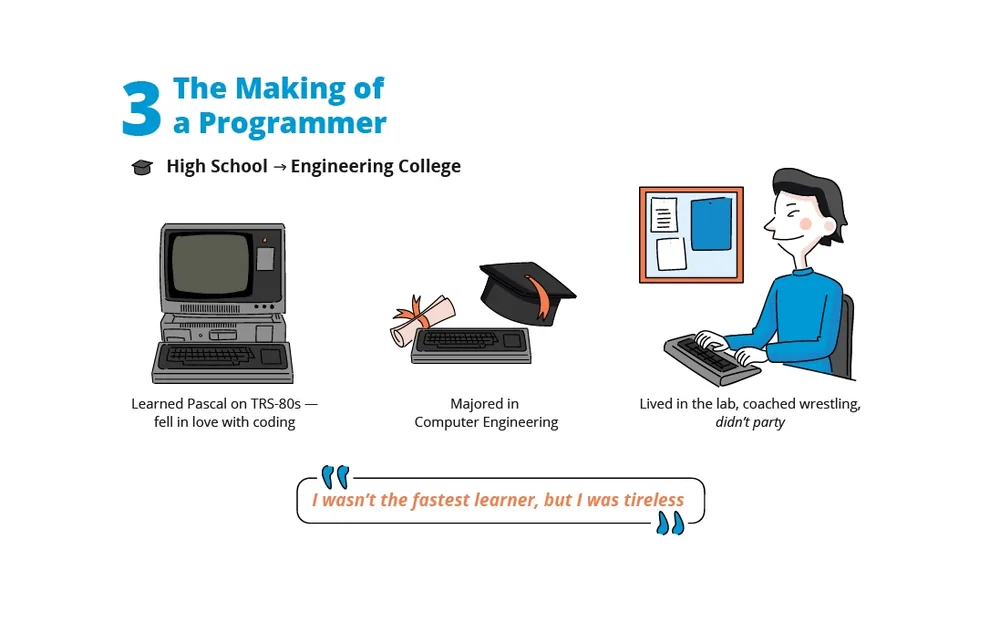
Slide 3 of 10 · High school to engineering college
The Making of a Programmer
I learned Pascal on TRS-80s and fell in love with coding.
I majored in computer engineering. I lived in the lab, coached wrestling, and didn’t party.
“I wasn’t the fastest learner, but I was tireless.”
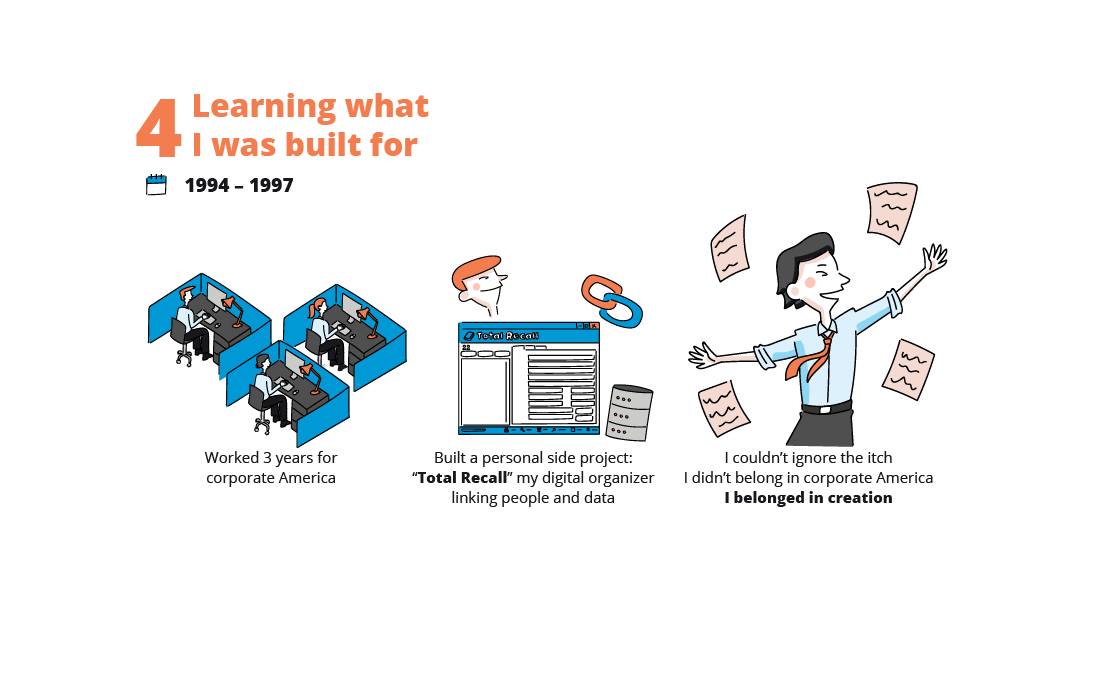
Slide 4 of 10 · 1994–1997
Learning What I Was Built For
I worked three years for corporate America.
On the side I built a personal project called Total Recall – my digital organizer linking people and data.
I couldn’t ignore the itch. I didn’t belong in corporate America. I belonged in creation.
Slide 5 of 10 · 1997–2018
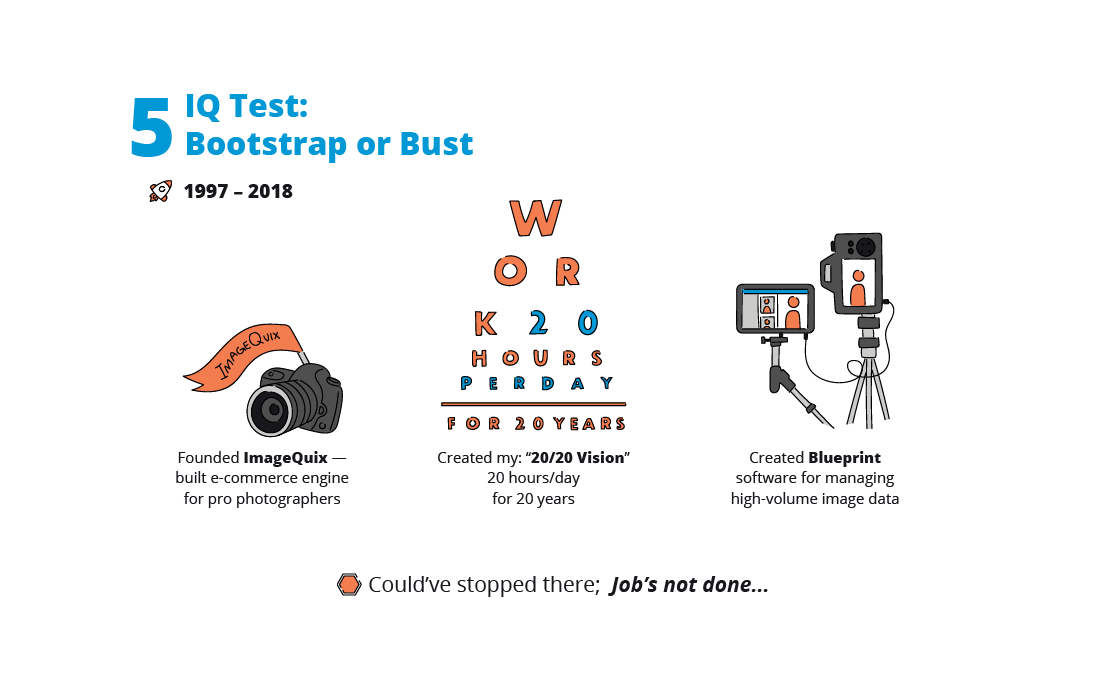
IQ Test: Bootstrap or Bust
I founded ImageQuix and built an e-commerce engine for professional photographers.
I lived by my own “20/20 vision”: work 20 hours a day for 20 years.
Then I created Blueprint, software for managing high-volume image data.
I could’ve stopped there. The job wasn’t done.
Slide 6 of 10 · 2019
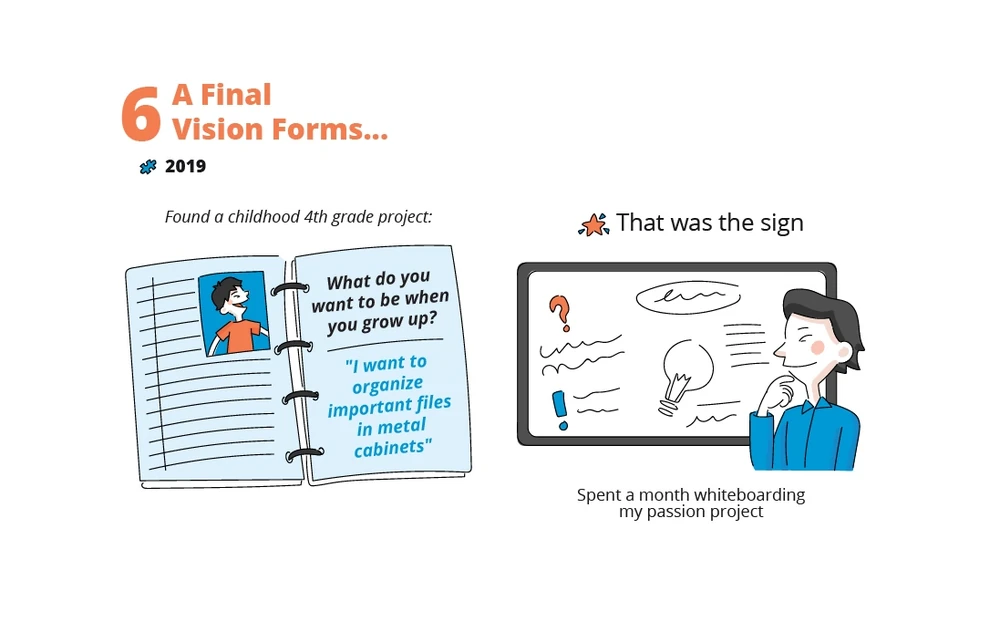
A Final Vision Forms…
I found a project from my 4th grade class. Under the question “What do you want to be when you grow up?” I had written: “I want to organize important files in metal cabinets.”
That was the sign. I spent a month whiteboarding my passion project.
Slide 7 of 10 · 2020–2023
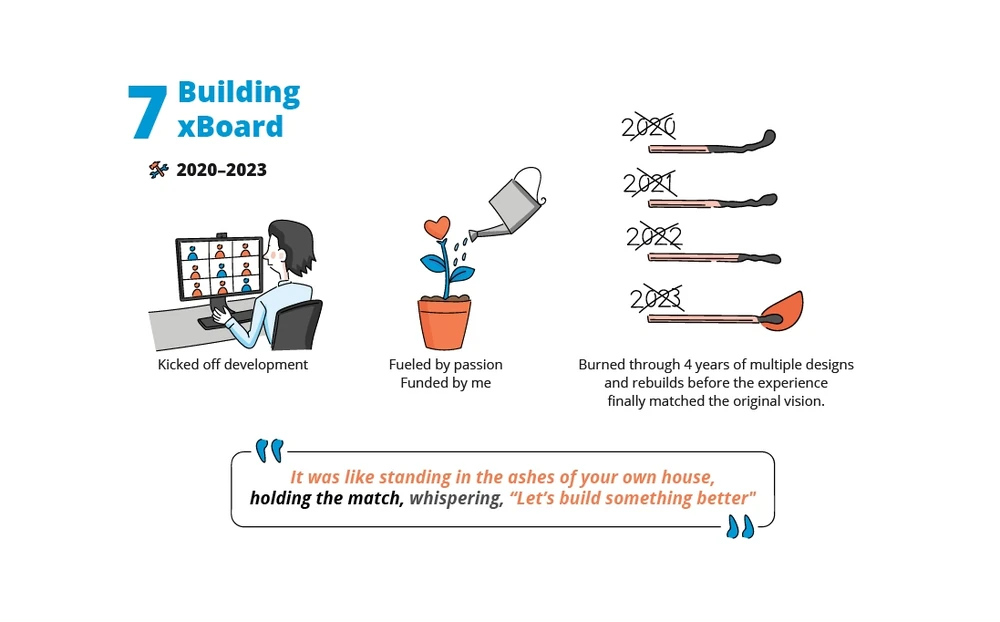
Building xBoard
I kicked off development. Fueled by passion, funded by me.
I burned through four years of designs and rebuilds – 2020, 2021, 2022, 2023 – before the experience finally matched the original vision.
“It was like standing in the ashes of your own house, holding the match, whispering, ‘Let’s build something better.’”
Slide 8 of 10 · 2024–2025: Early development and testing
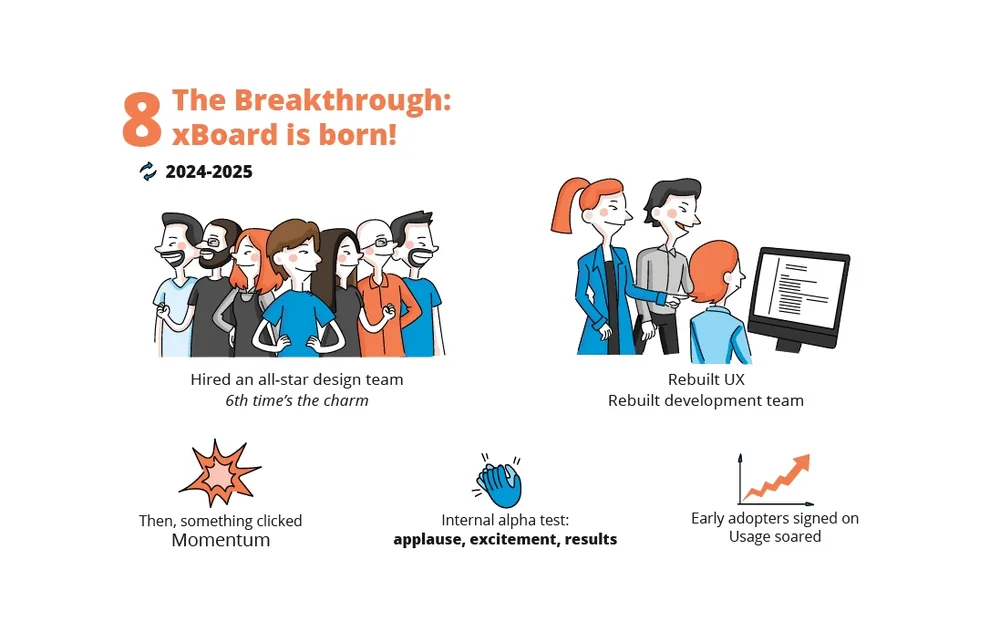
The Breakthrough: xBoard was born
I hired an all-star design team – sixth time’s the charm – then rebuilt the UX and rebuilt the development team.
Then something clicked, and the work gained momentum. The internal alpha test brought applause, excitement, and results.
Early adopters signed on, and usage soared.
Slide 9 of 10
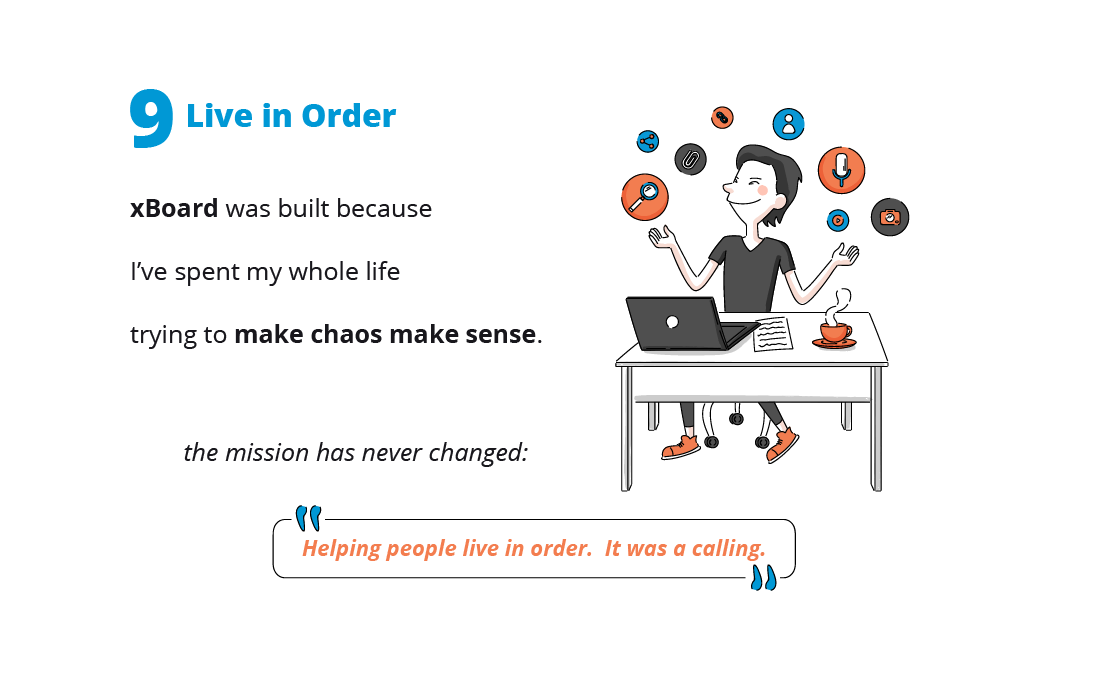
Live in Order
xBoard was built because I’ve spent my whole life trying to make chaos make sense.
The mission has never changed.
“Helping people live in order. It was a calling.”
Slide 10 of 10
xBoard
Live in order.
xBoard today
xBoard is work management software that helps small businesses organize projects, customer jobs, files, tasks, and conversations in one place.
Each Board brings related files, tasks, notes, and conversations together. Teams can work privately and share selected Boards with customers.
Businesses like Sign-Xpress use xBoard to keep customer information together, track jobs, and find answers without searching through scattered tools.